
PHA Playful Learning Library.
A playful learning library for the Philadelphia Housing Authority that transforms waiting time into meaningful literacy engagement for children and families.
Client: Philadelphia Housing Authority
Industry: Government / Nonprofit
Services: Placemaking, Product & Service Design, Experiential and Visual Design, Sourcing and Manufacturing
Design Brief.
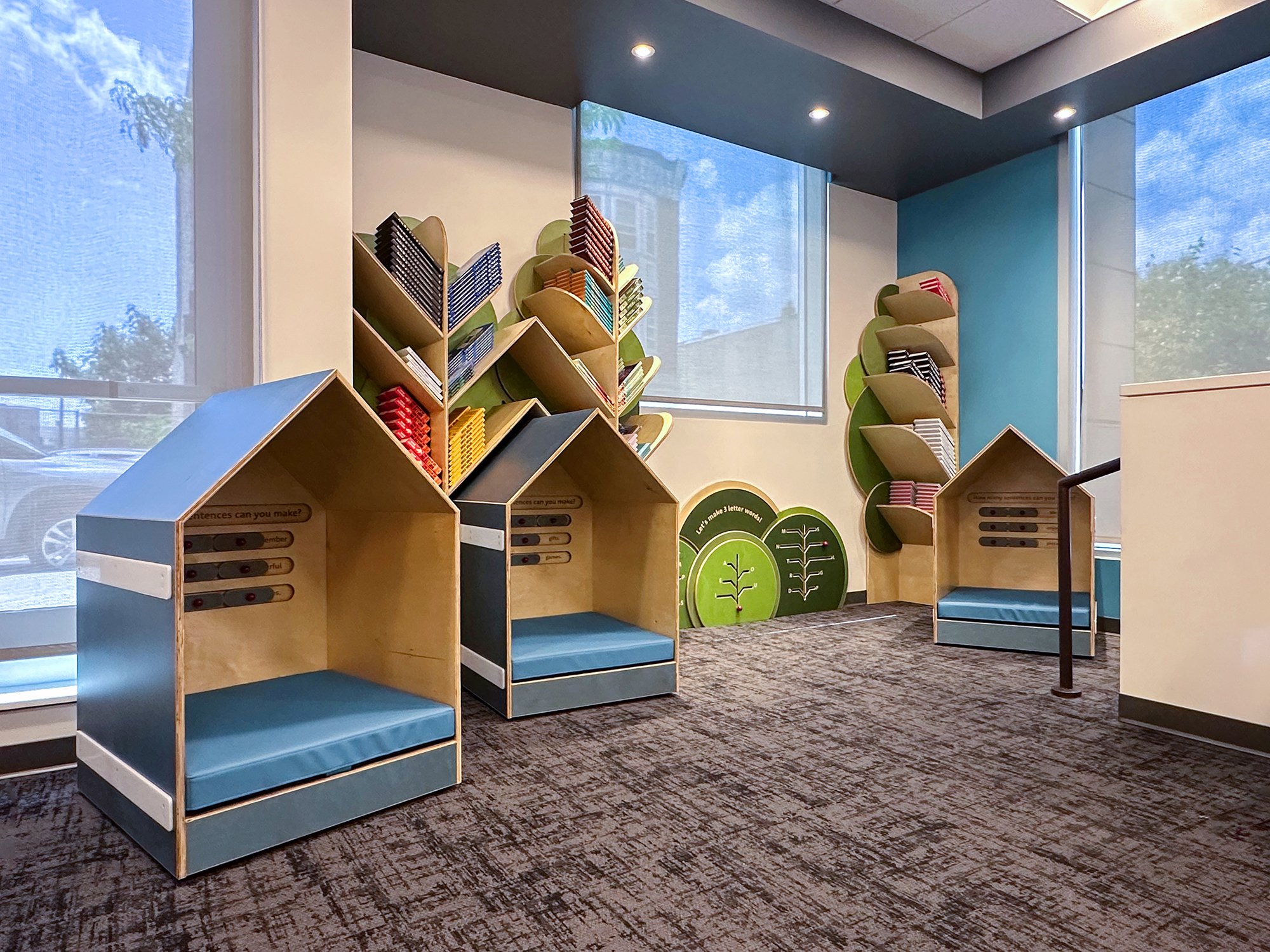
The Philadelphia Housing Authority sought to create a welcoming, child-centered environment within its service offices; a place where children could remain engaged in meaningful learning while caregivers accessed critical housing and support services. The goal was not simply to add furniture, but to integrate playful literacy tools directly into the space, encouraging language development, creativity, and repeat interaction.
The installation needed to be durable, easy to maintain, ADA-conscious, and adaptable. It also needed to feel warm and inviting (not institutional) while supporting structured literacy outcomes rooted in Playful Learning principles.
Outcome.
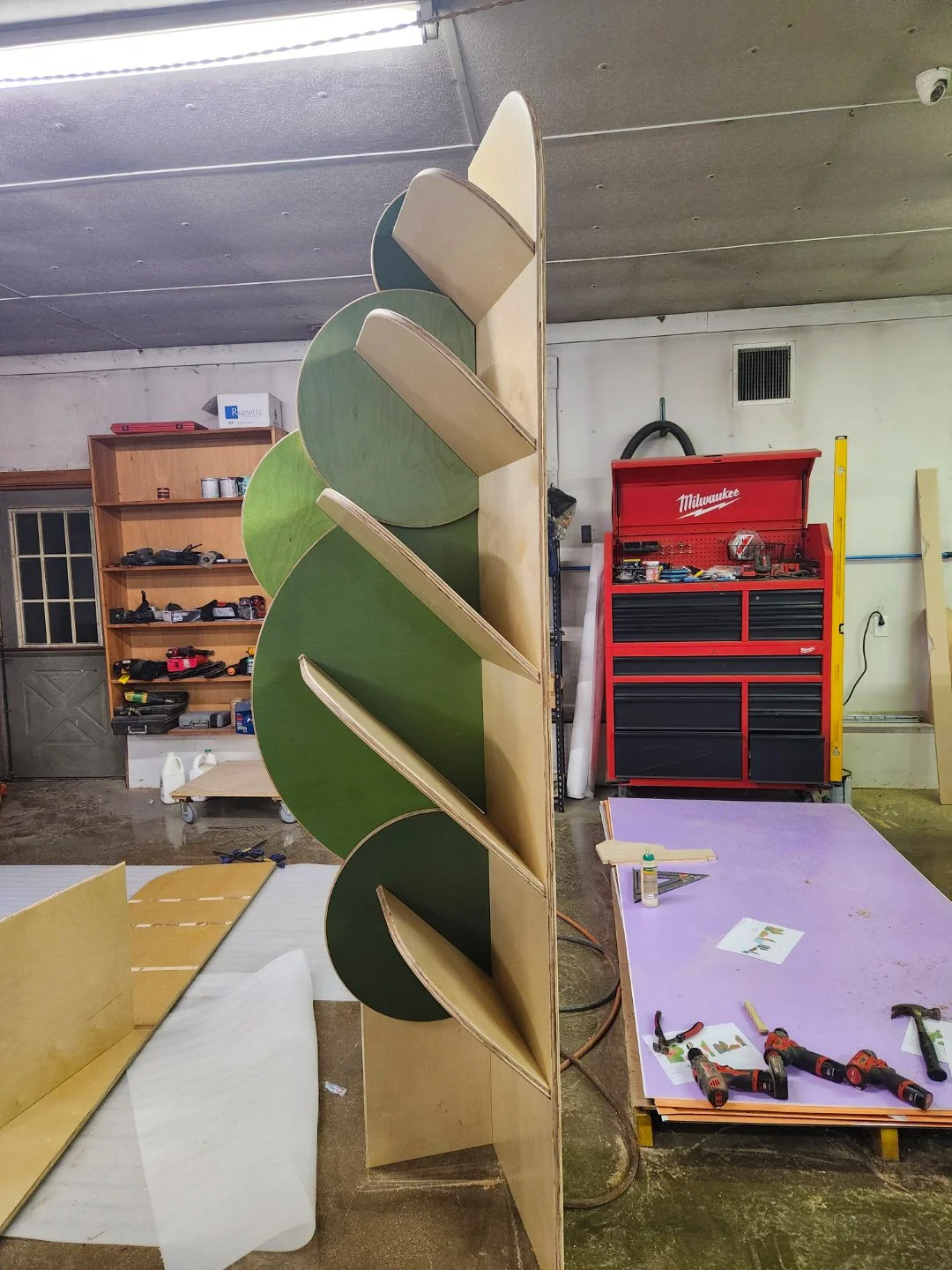
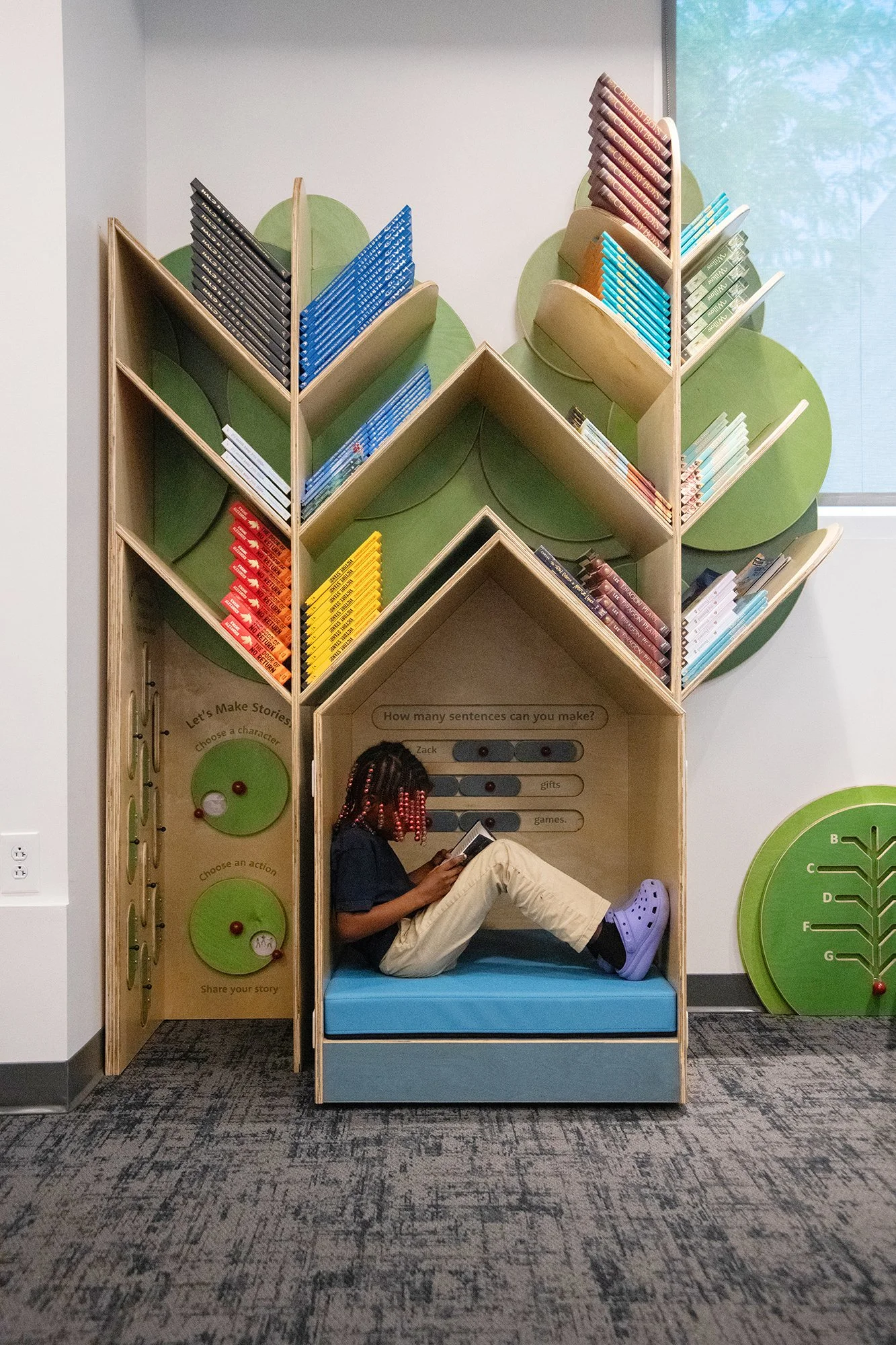
FutureTogether designed and fabricated a modular “Learning Library” system that merges storage, seating, and interactive literacy games into a cohesive environment. Tree-like shelving structures hold curated books while integrated play panels invite children to create words, build sentences, tell stories, and engage in memory challenges.
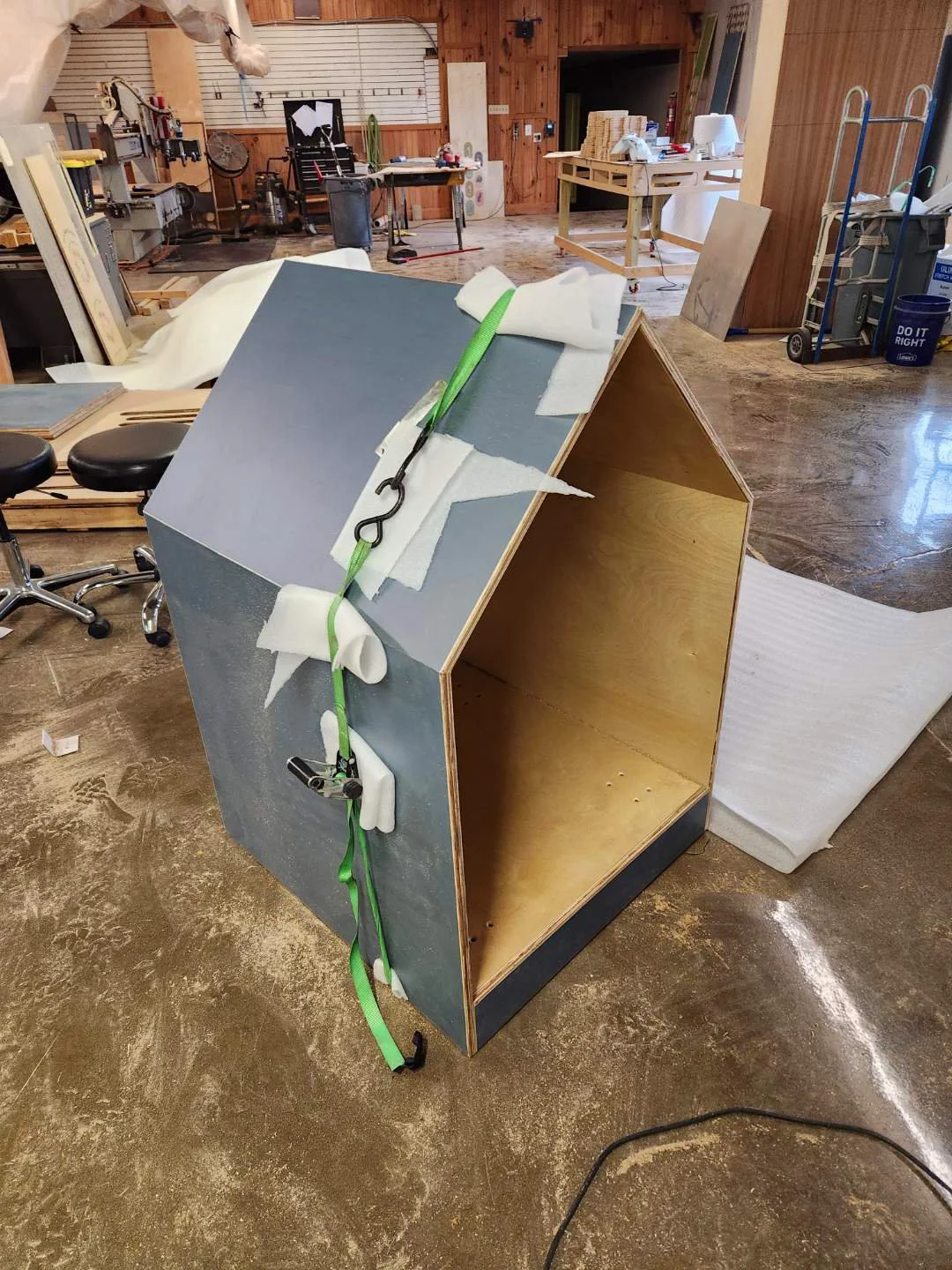
Portable reading nooks shaped like small houses provide quiet spaces for focused engagement. Inside each nook, interchangeable sentence-building games encourage repeat play and sustained literacy exploration. The result is a system that feels intuitive and joyful, yet is built for long-term institutional use: Easy to clean, easy to maintain, and designed for daily interaction.
Social Impact.
The Playful Learning Library transforms passive waiting time into active learning time. Children engage in vocabulary building, storytelling, sentence construction, and memory games, all while caregivers access essential housing services. By embedding literacy into everyday civic spaces, the project reinforces that learning does not only happen in classrooms. It happens in community spaces, in moments of pause, and in environments designed with intention.
This installation supports early literacy development, family interaction, and equitable access to enriching learning tools within public housing facilities.
Environmental Impact.
The system was fabricated using durable FSC certified plywood construction with low-maintenance finishes designed for longevity in high-traffic environments. Modular components allow for repair, replacement, and relocation without full system removal.
Custom cushions inside the reading nooks were designed with wipeable, easy-clean surfaces, ensuring hygiene standards are met while maintaining comfort. By prioritizing durability, modularity, and long life cycles, the project reduces replacement frequency and material waste over time.
Repeat Play.
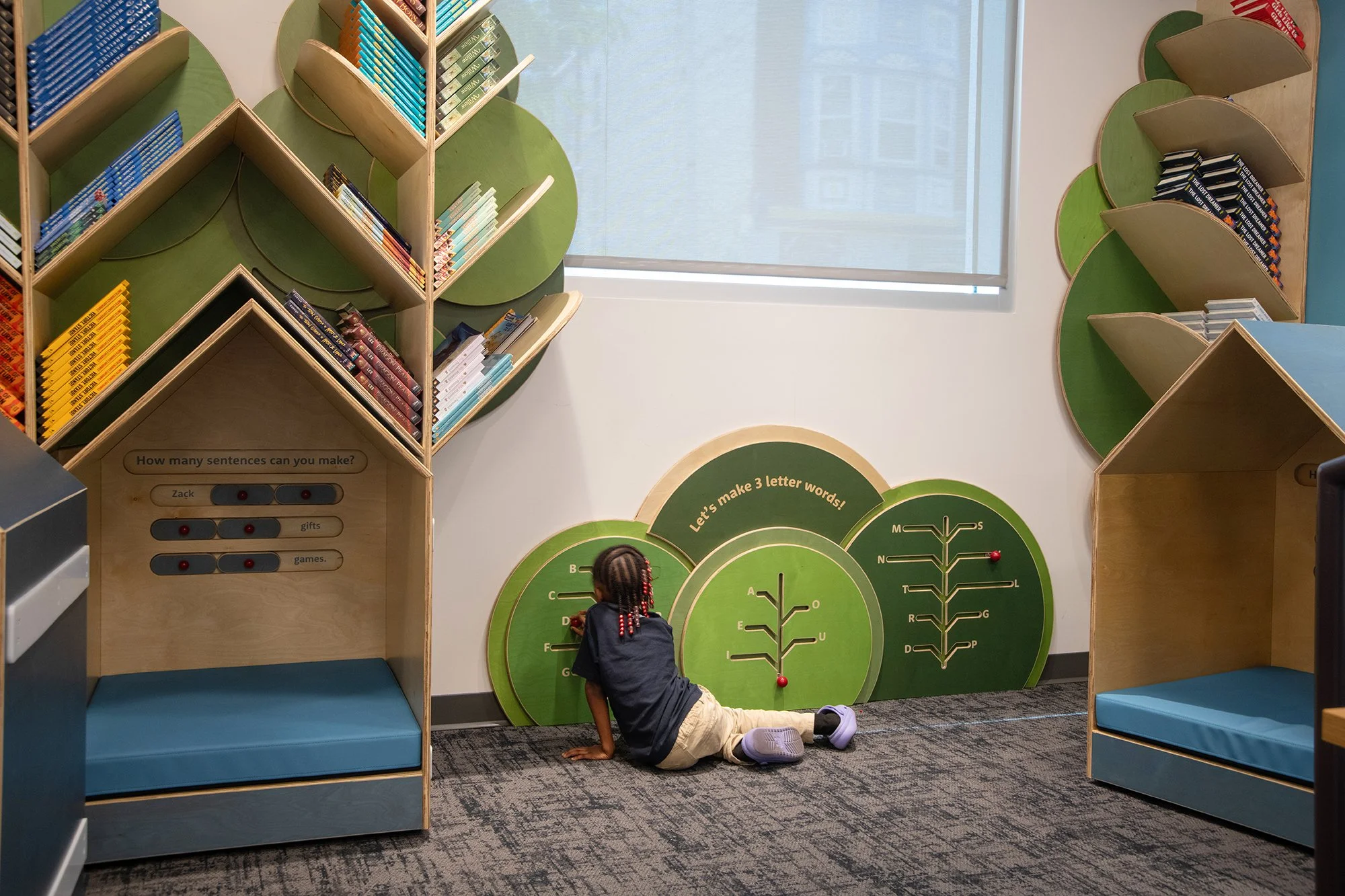
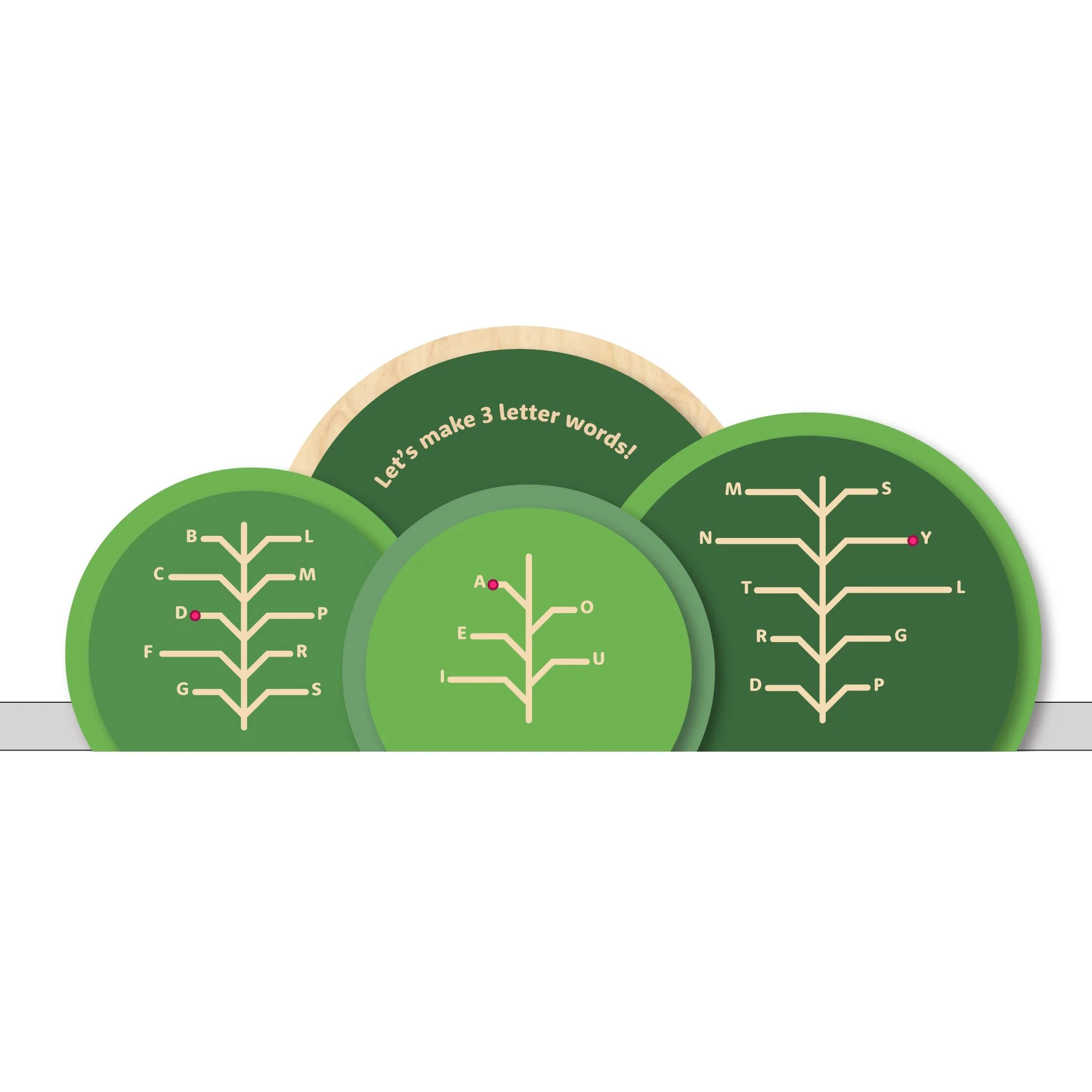
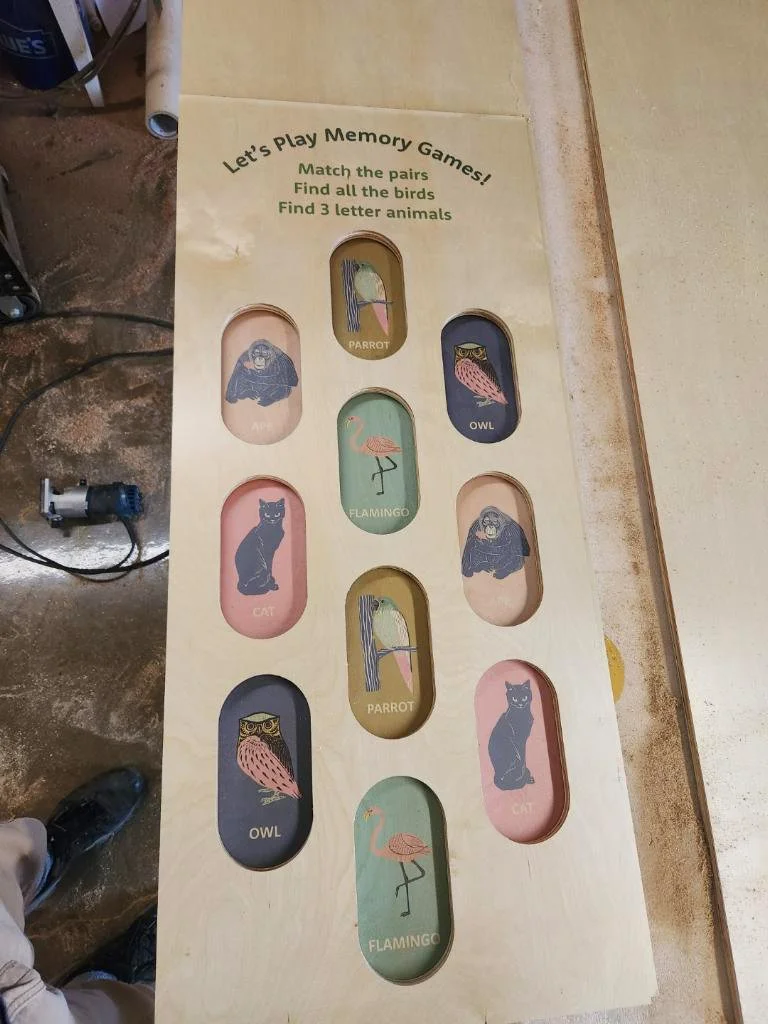
We designed the playful learning games with range and repeat engagement as the core objective. Each element was conceived to invite children back again and again, offering multiple levels of complexity and open-ended outcomes. The “reading nooks” small house forms reference the mission of the Philadelphia Housing Authority, creating a symbolic and welcoming architecture scaled to children. Layered tree elements bring nature indoors, softening the institutional environment while reinforcing themes of growth and discovery. Within this setting, we developed a family of literacy-based games: a multi-level memory match, a spin-the-wheel storytelling device (character, setting, action), a word-building “letter bush,” and sentence construction panels embedded within the reading nooks. Each game was structured for evolving difficulty and open interpretation, ensuring sustained relevance rather than one-time novelty.
Engineering for High-Use.
Once the learning concepts were defined, we engineered them for durability and clarity. Interactive components were simplified to essential mechanics to reduce failure points. Moving parts were tested for appropriate resistance and long-term reliability. Hardware was sourced and evaluated for repeated use.
Edges were softened and reinforced. Surfaces were selected for cleanability and maintenance. Details were refined to support intuitive interaction for children while maintaining straightforward upkeep for staff.
Modular Implementation & Long-Term Performance.
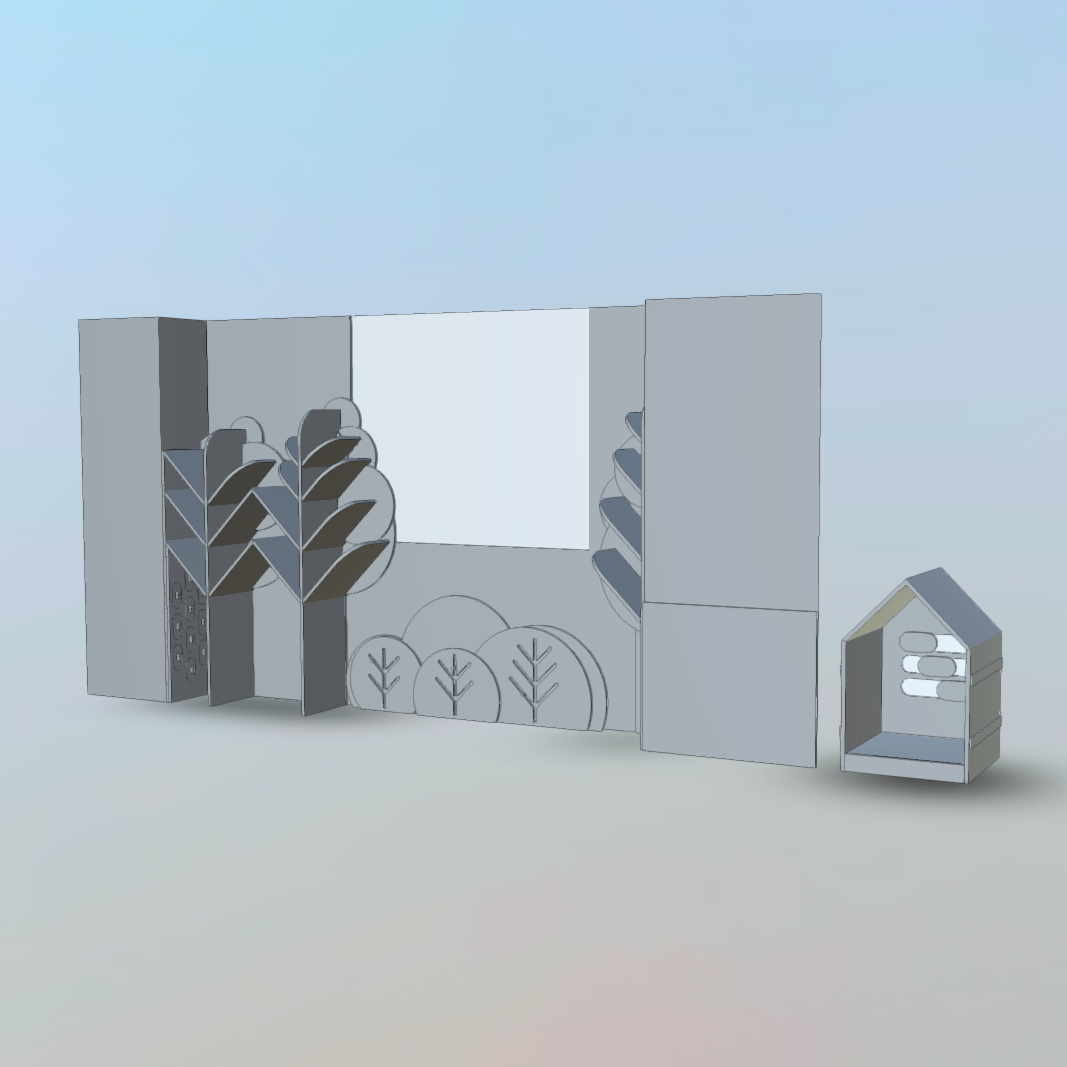
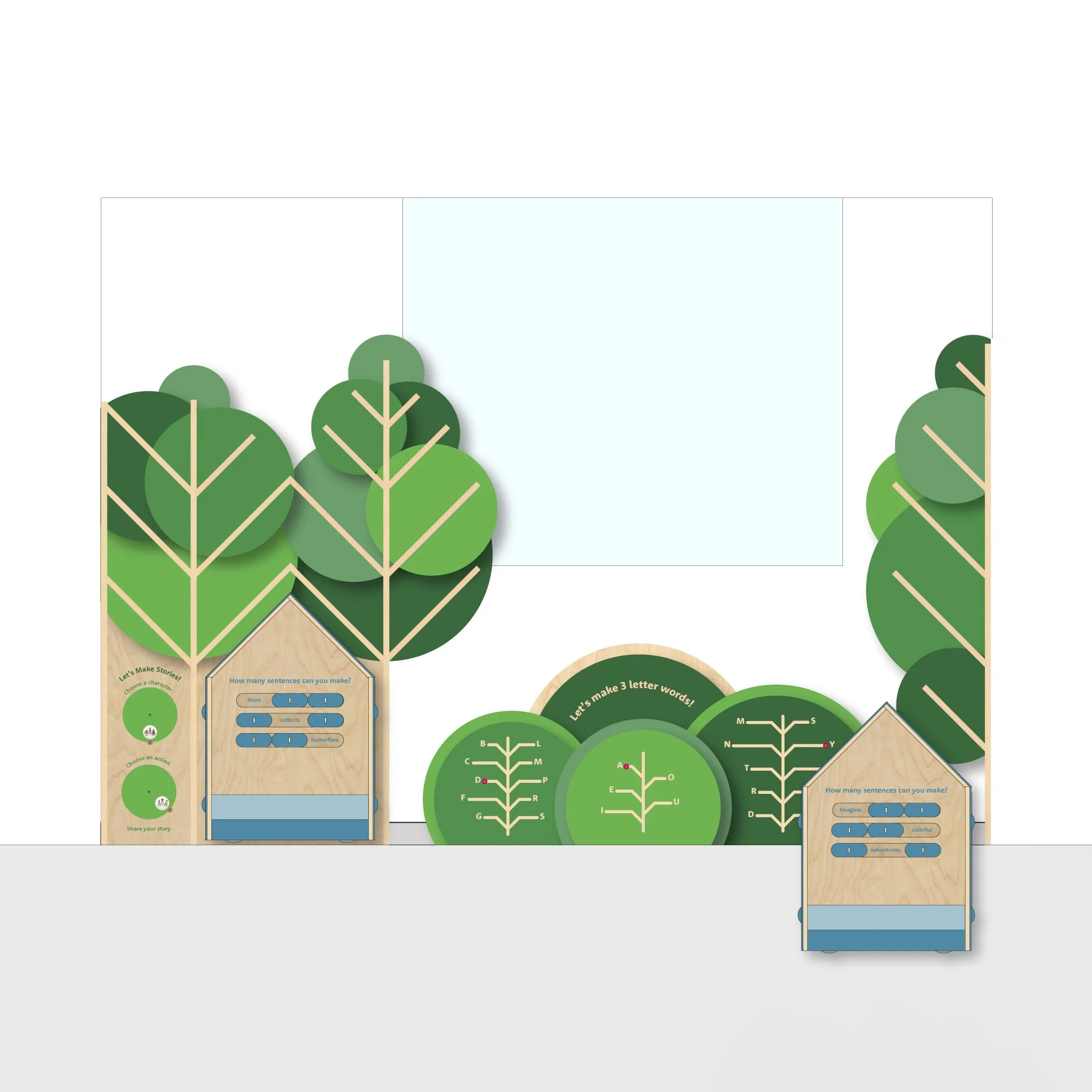
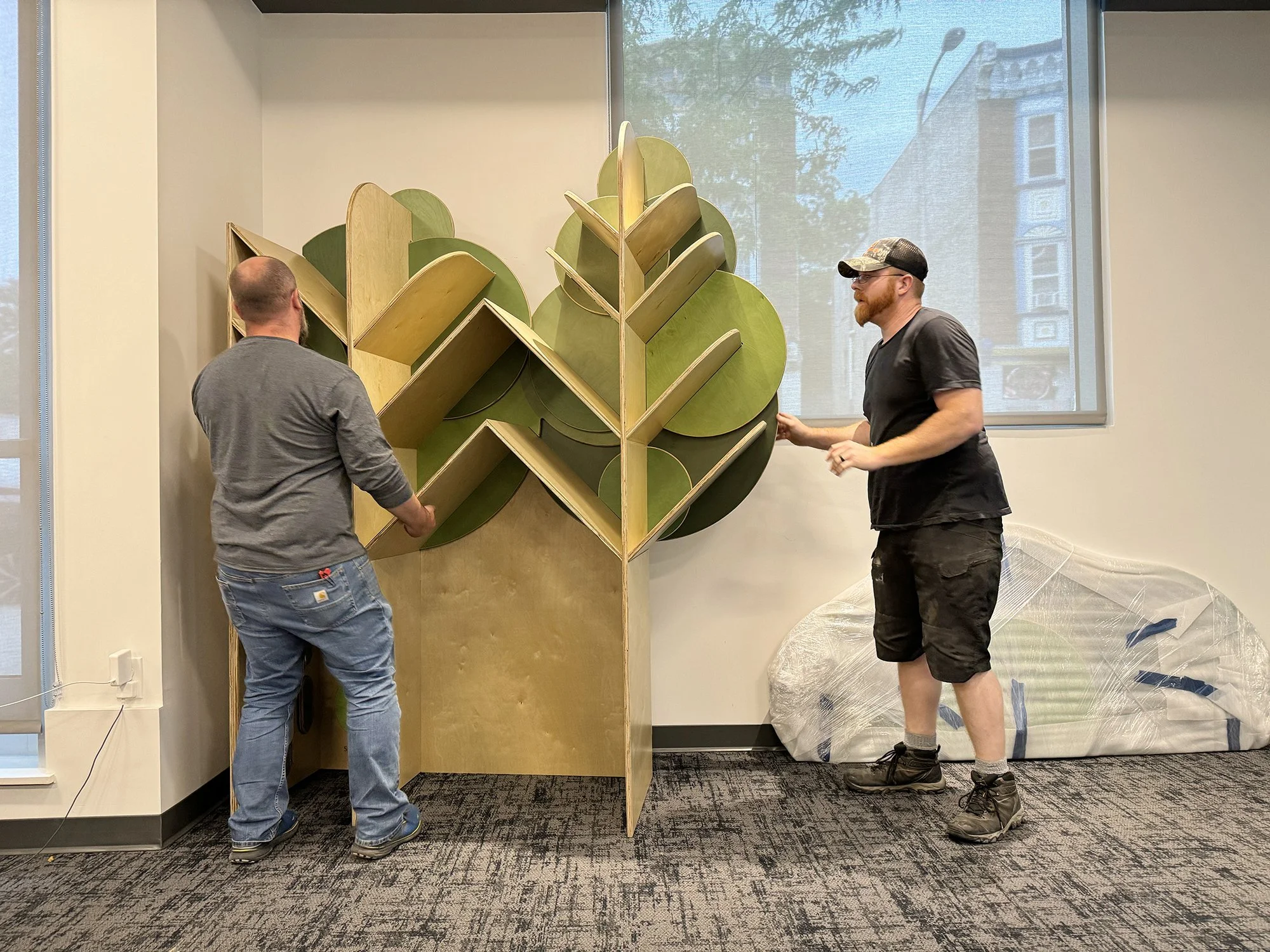
The reading nooks were designed as portable modules, allowing PHA to reconfigure layouts as programming needs evolve. Structural joinery was simplified for strength and longevity. Custom cushions were fabricated for precise fit while remaining removable and easy to clean.
Behind the warmth of layered greens and house-shaped forms lies a disciplined process of translation. Research, stakeholder goals, literacy development principles, facility constraints, and budget realities were resolved into a cohesive system. The result is an environment that feels inviting and imaginative to children, yet is engineered to perform reliably within the daily demands of a public housing authority setting.
Links & Press.