
The Learning Pavillion.
Transforming everyday infrastructure into a stage for literacy, imagination, and community play.
Client: Live + Learn Philadelphia
Industry: Realestate / Nonprofit
Services: Placemaking, Product & Service Design, Experiential and Visual Design, Sourcing and Manufacturing
Design Brief.
At the North Central Live + Learn site, a simple bike shed presented an opportunity. Rather than serve a single utilitarian function, the structure could become a multi-use learning environment embedded directly within affordable housing.
Working alongside architects and the Playful Learning Landscapes team, the goal was to transform the shed into an active literacy and performance space; One that invited storytelling, movement, collaboration, and repeat engagement while remaining durable and easy to maintain within a residential setting.
Outcome.
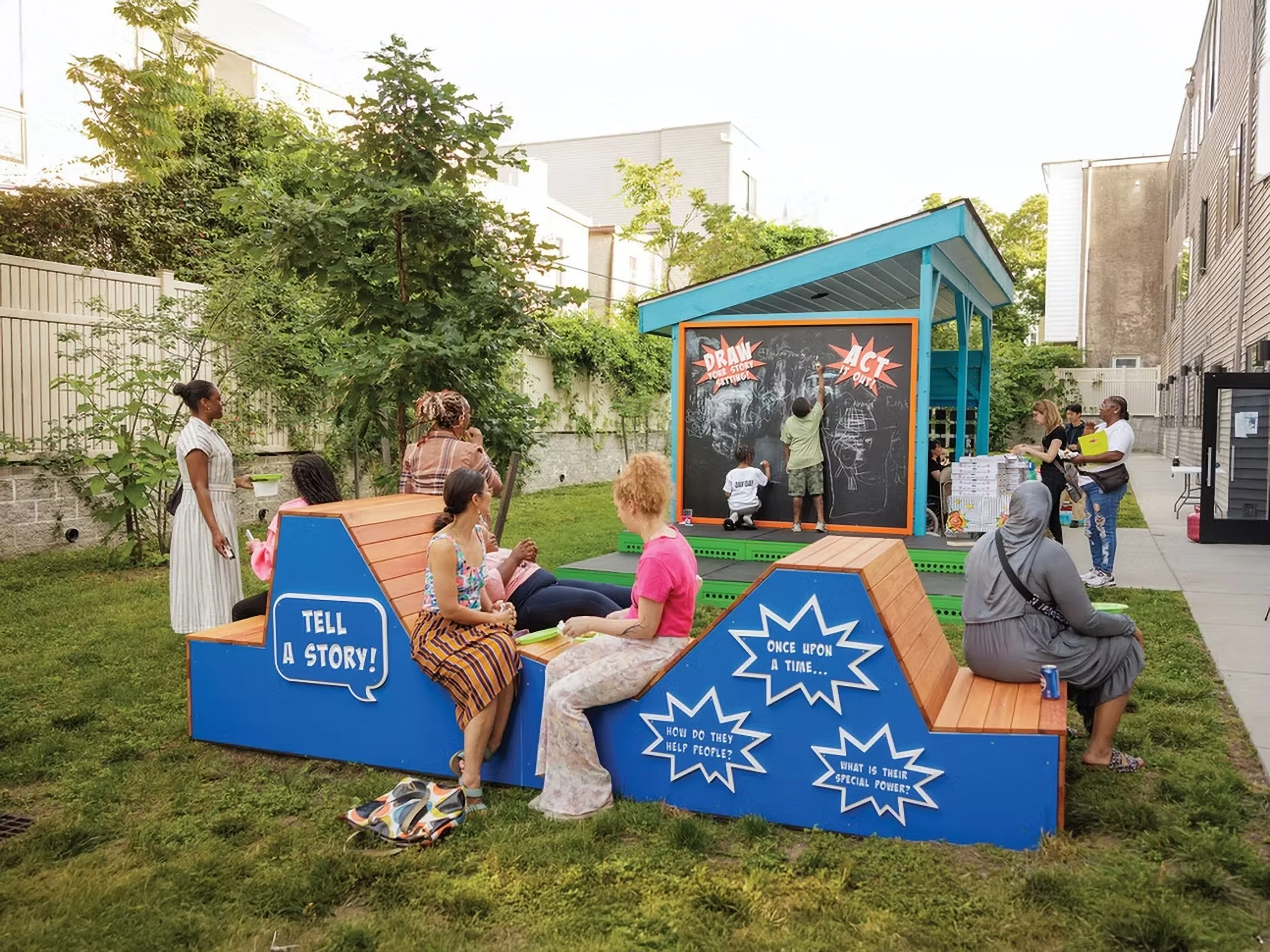
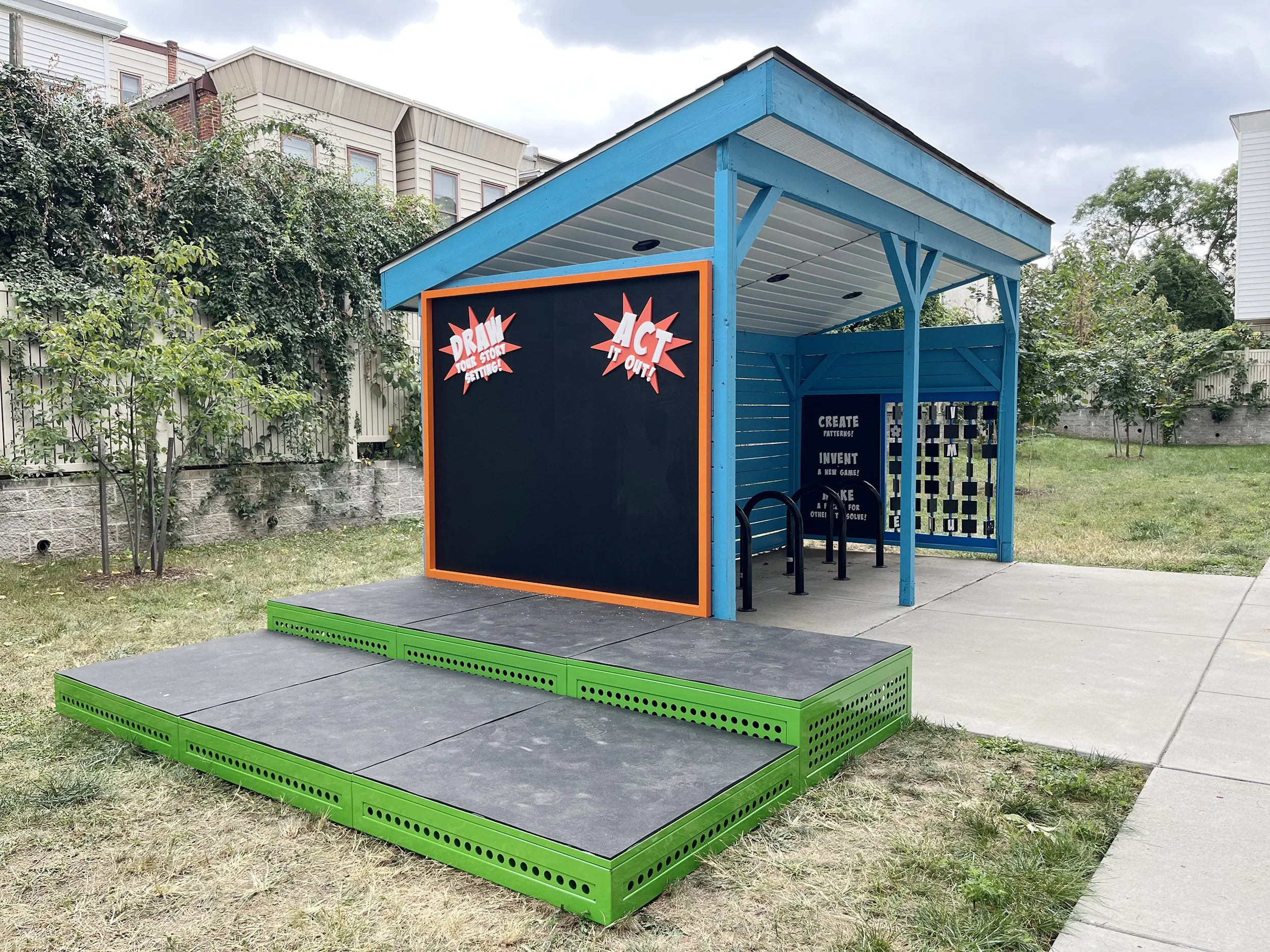
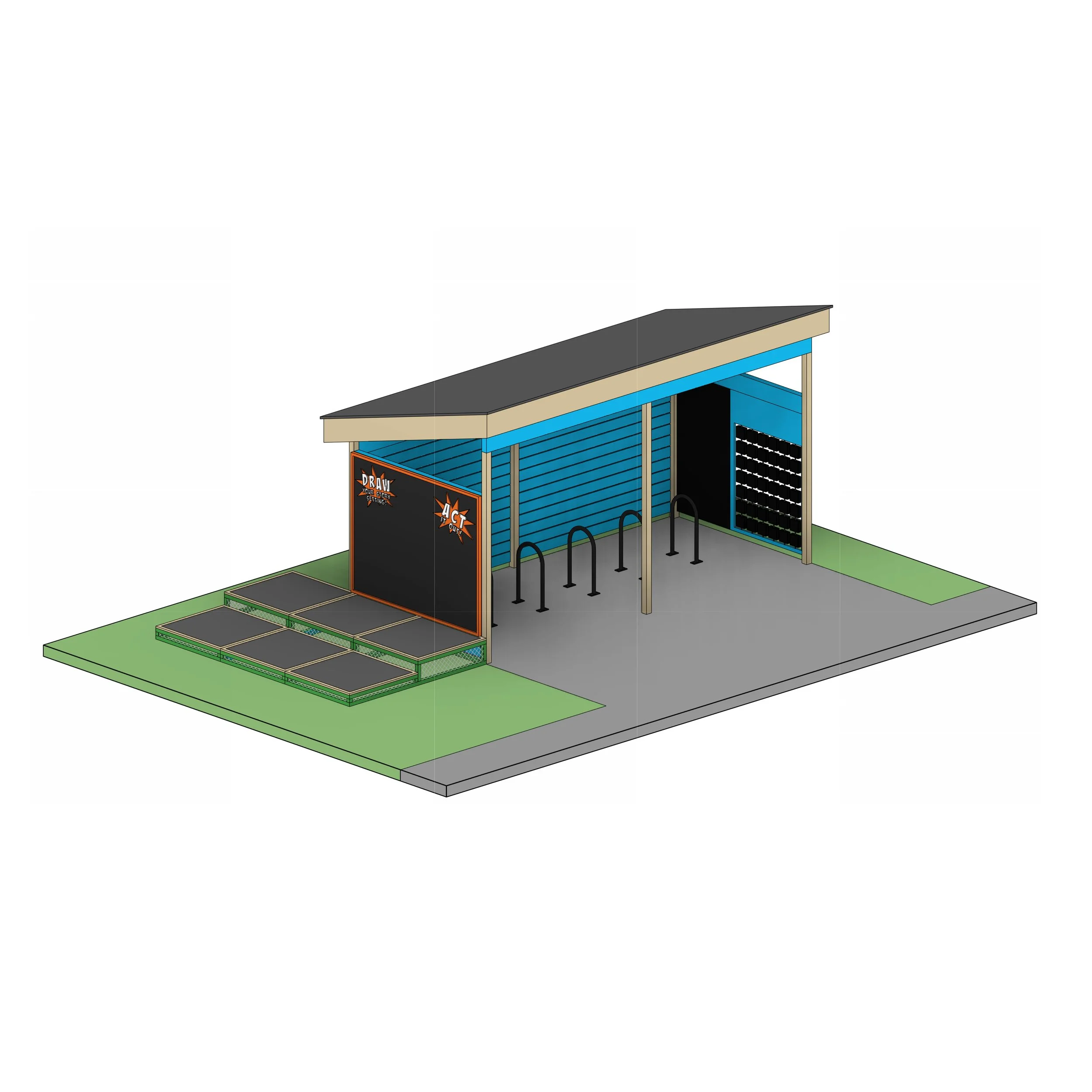
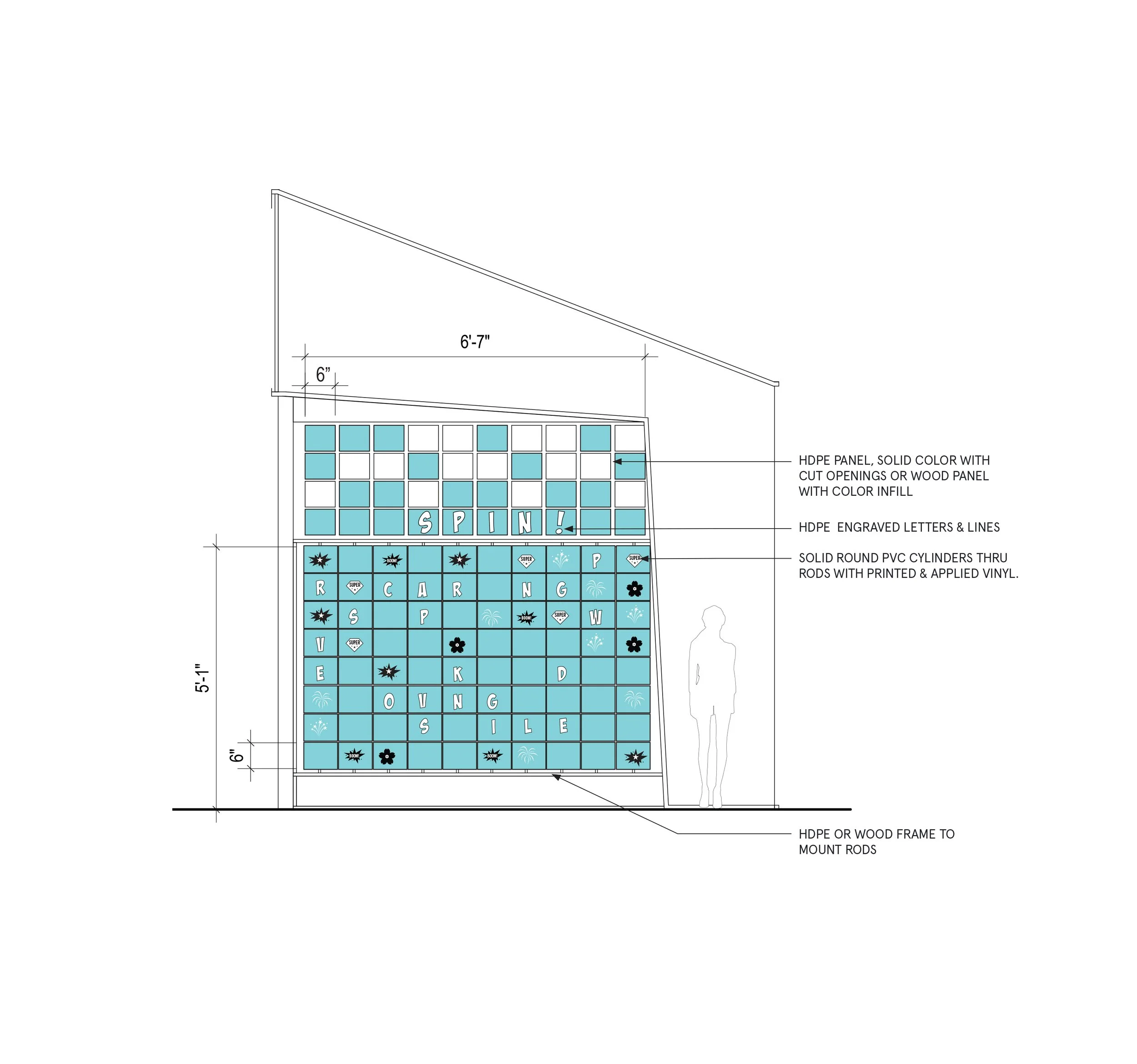
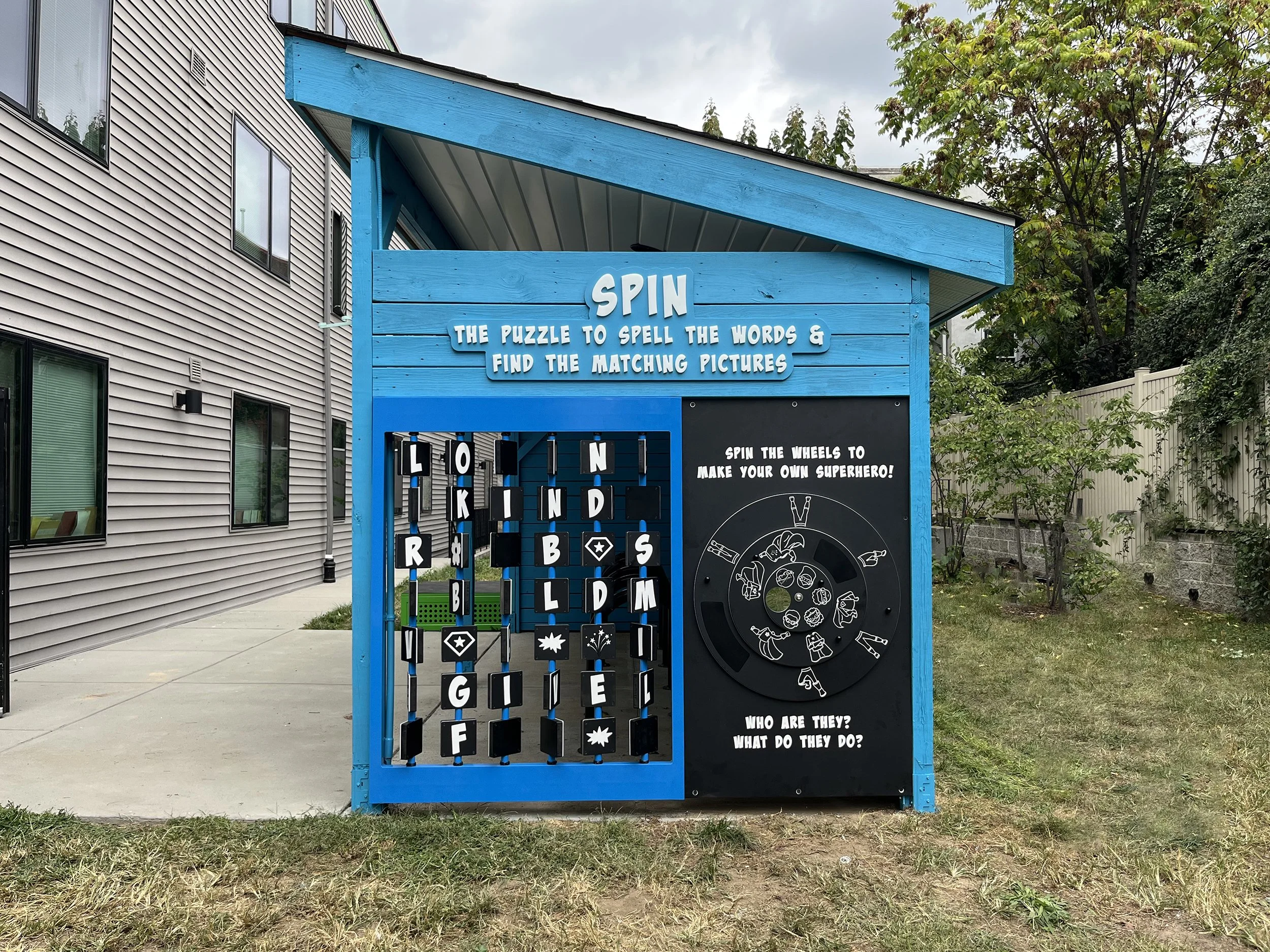
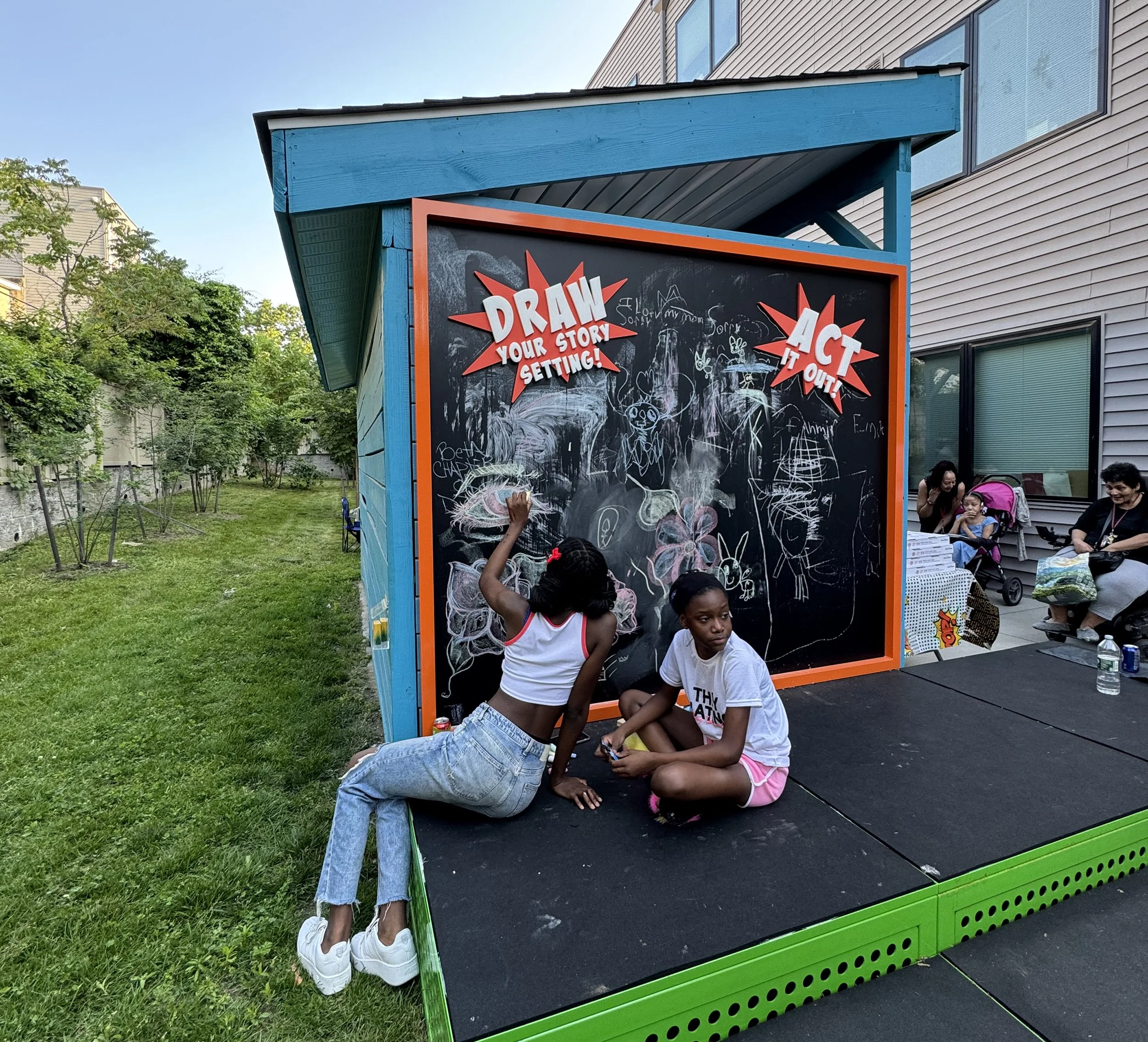
The former bike shed now operates as a compact outdoor learning pavilion. A raised platform functions as a stage for storytelling and performance. A large chalkboard wall encourages drawing and expression. On one side, spinning letter panels support word-building and literacy play. On the other, a large interactive wheel invites children to “create your own superhero,” prompting identity, narrative thinking, and imagination.
What was once passive infrastructure is now an active community asset, used for play, gathering, and informal programming.
Social Impact.
Located within affordable housing, the installation ensures that playful learning opportunities are embedded directly into daily life. Children do not need to travel to museums or enrichment centers since literacy, creativity, and performance are integrated into their own courtyard.
The project supports Live + Learn Philadelphia’s mission of combining stable housing with educational opportunity. It creates shared space for families to gather, collaborate, and build narrative skills together.
Environmental Impact.
By reusing an existing structure rather than constructing new infrastructure, the project minimized material consumption while maximizing social return. Durable finishes and simplified mechanical components reduce long-term maintenance needs. Materials were selected for exterior performance, longevity, and ease of cleaning.
The design demonstrates how adaptive reuse can extend the life and value of modest architectural structures within housing developments.
Vision to System.
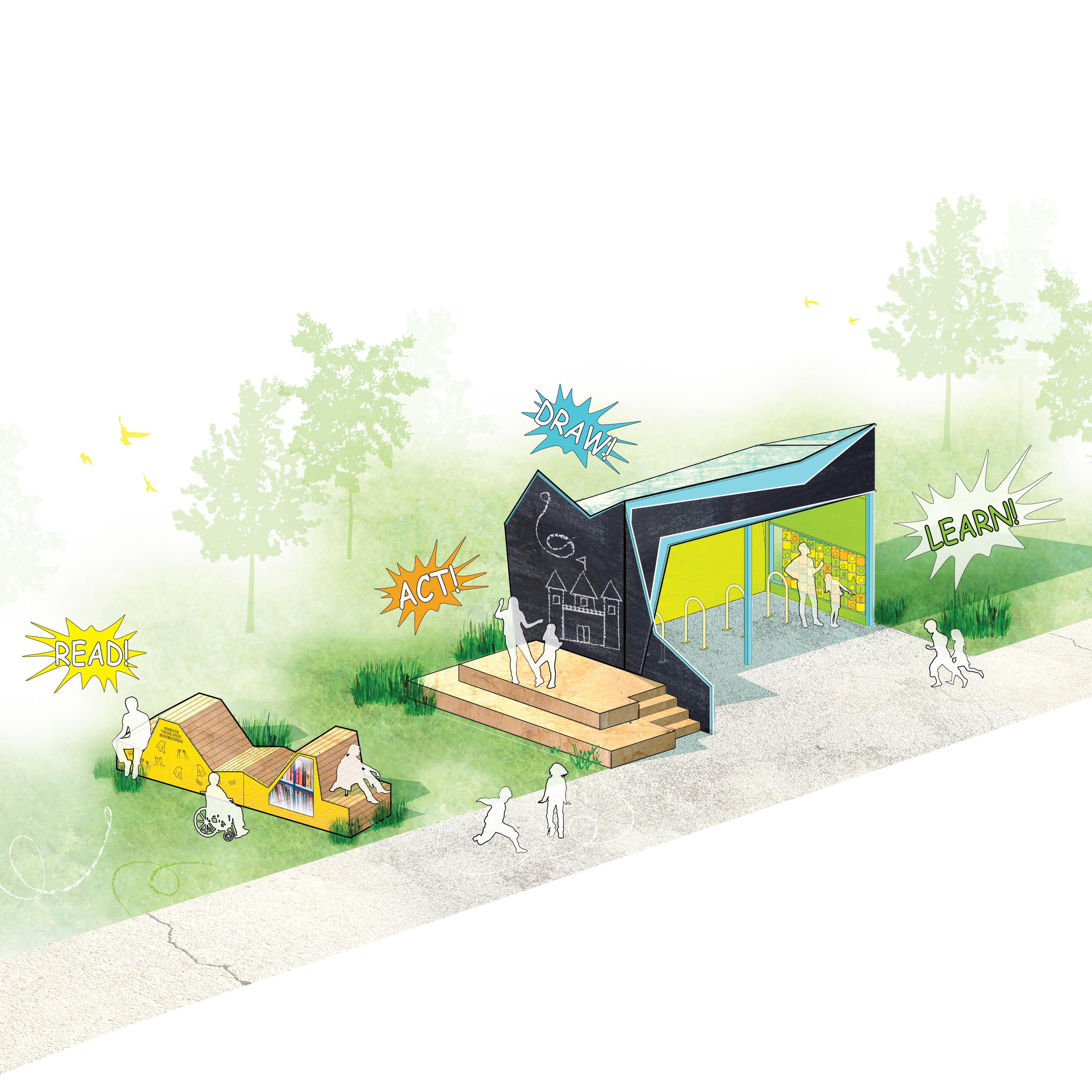
The initial concept approached the shed as an architectural intervention: layered, additive, and spatially expressive. Our role was to translate that vision into an industrial design strategy focused on clarity, efficiency, and long-term performance. We simplified the structure, reduced unnecessary layers, and focused on achieving maximum experiential impact with minimal structural intervention.
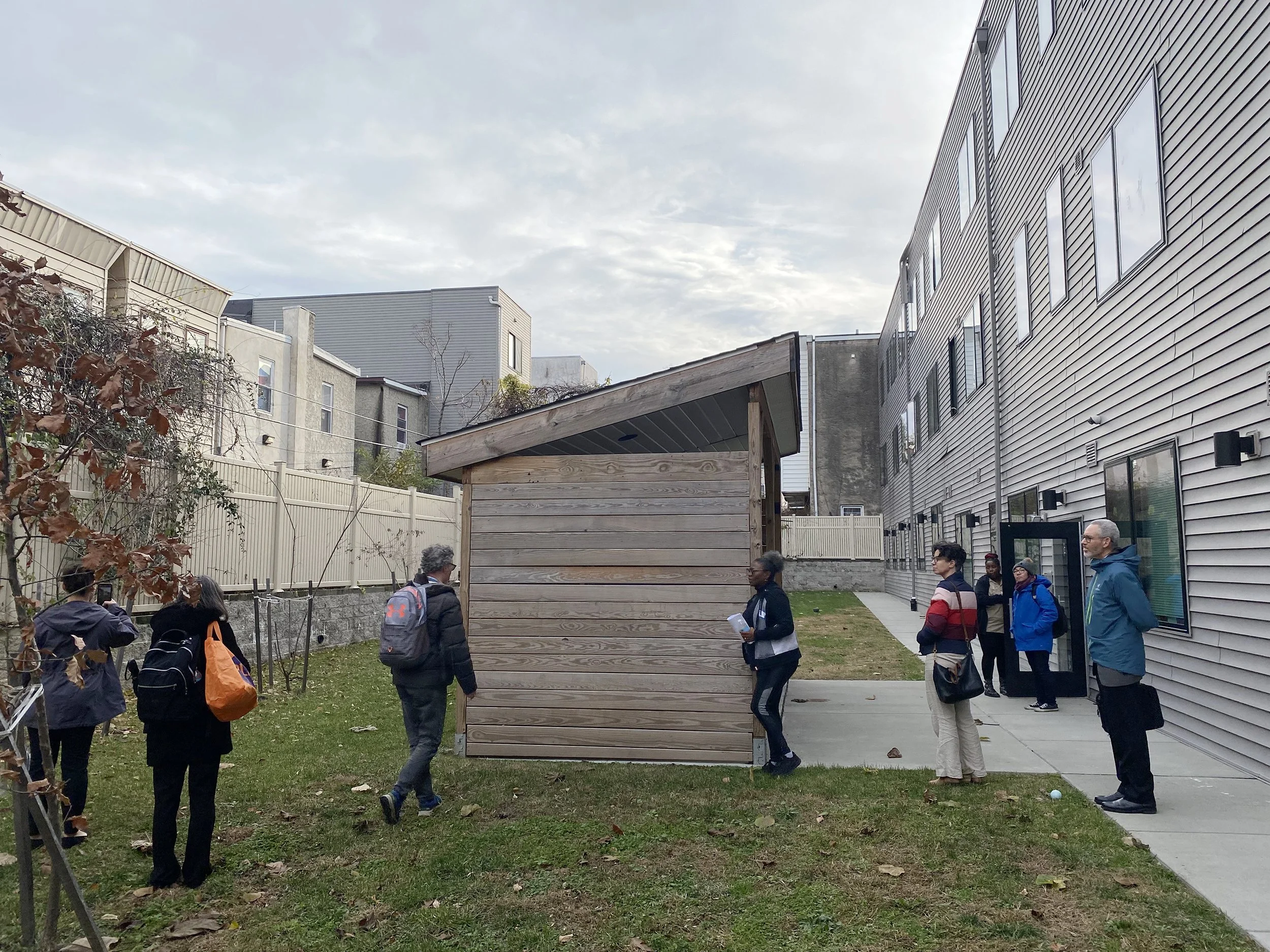
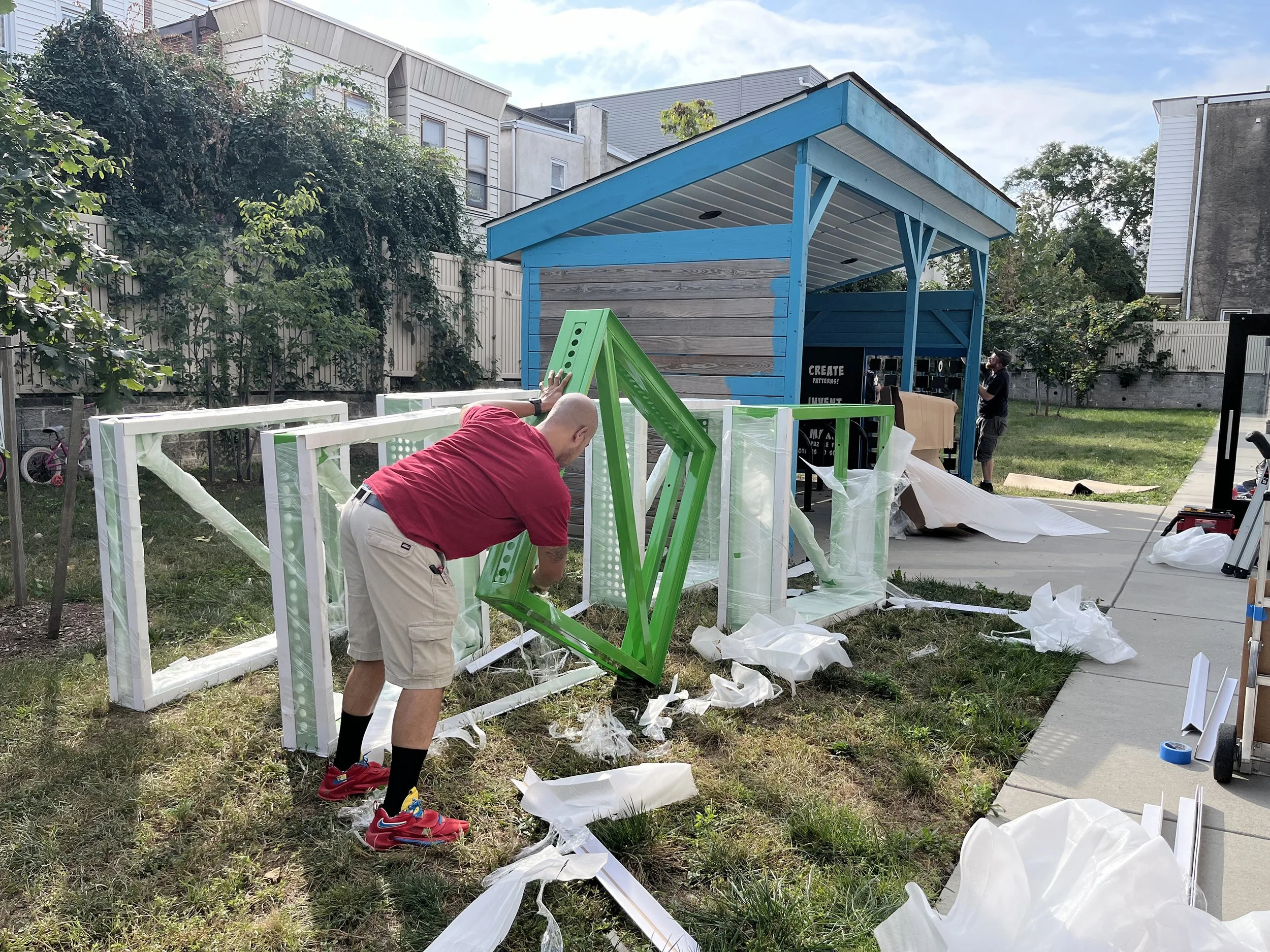
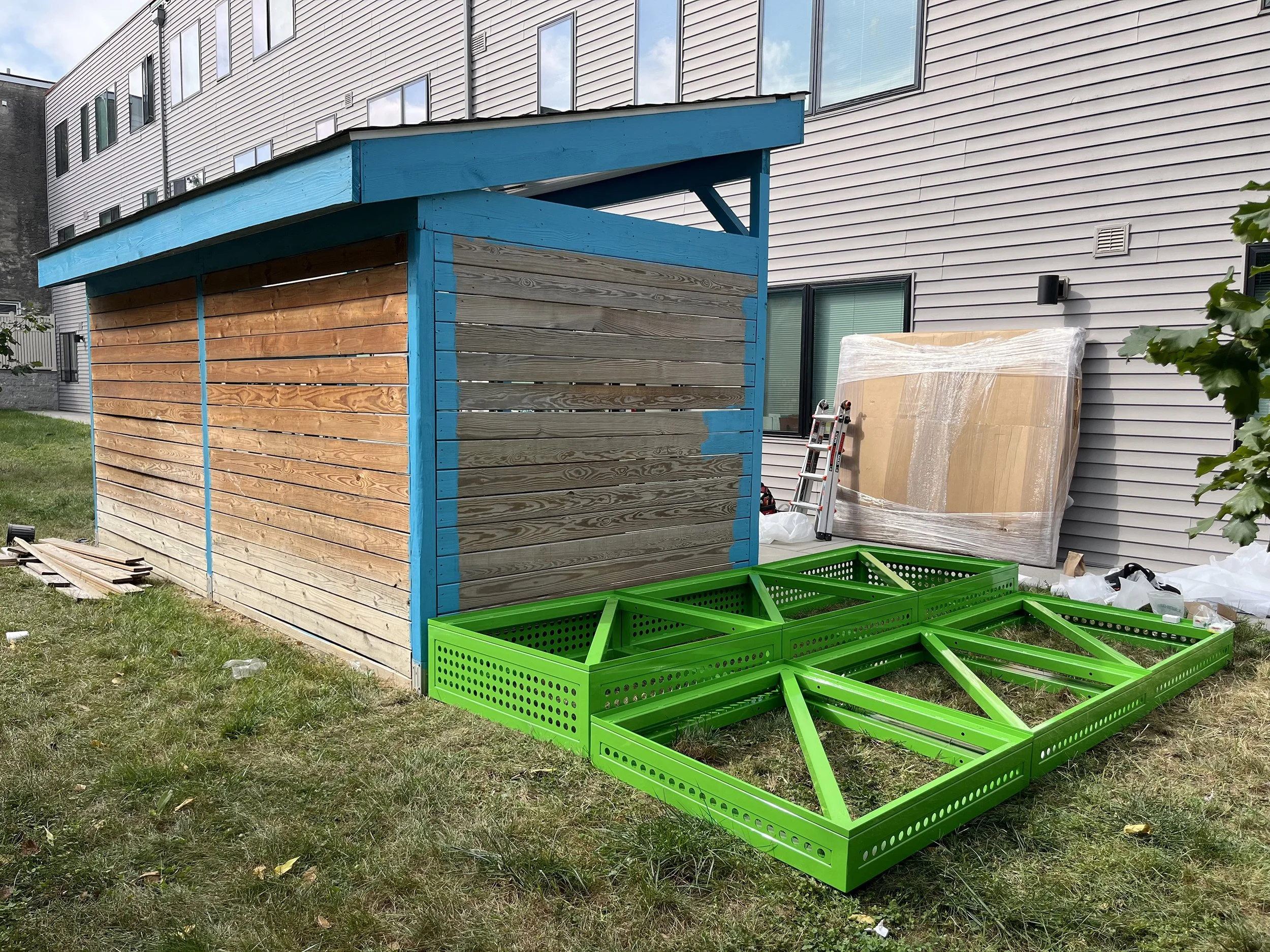
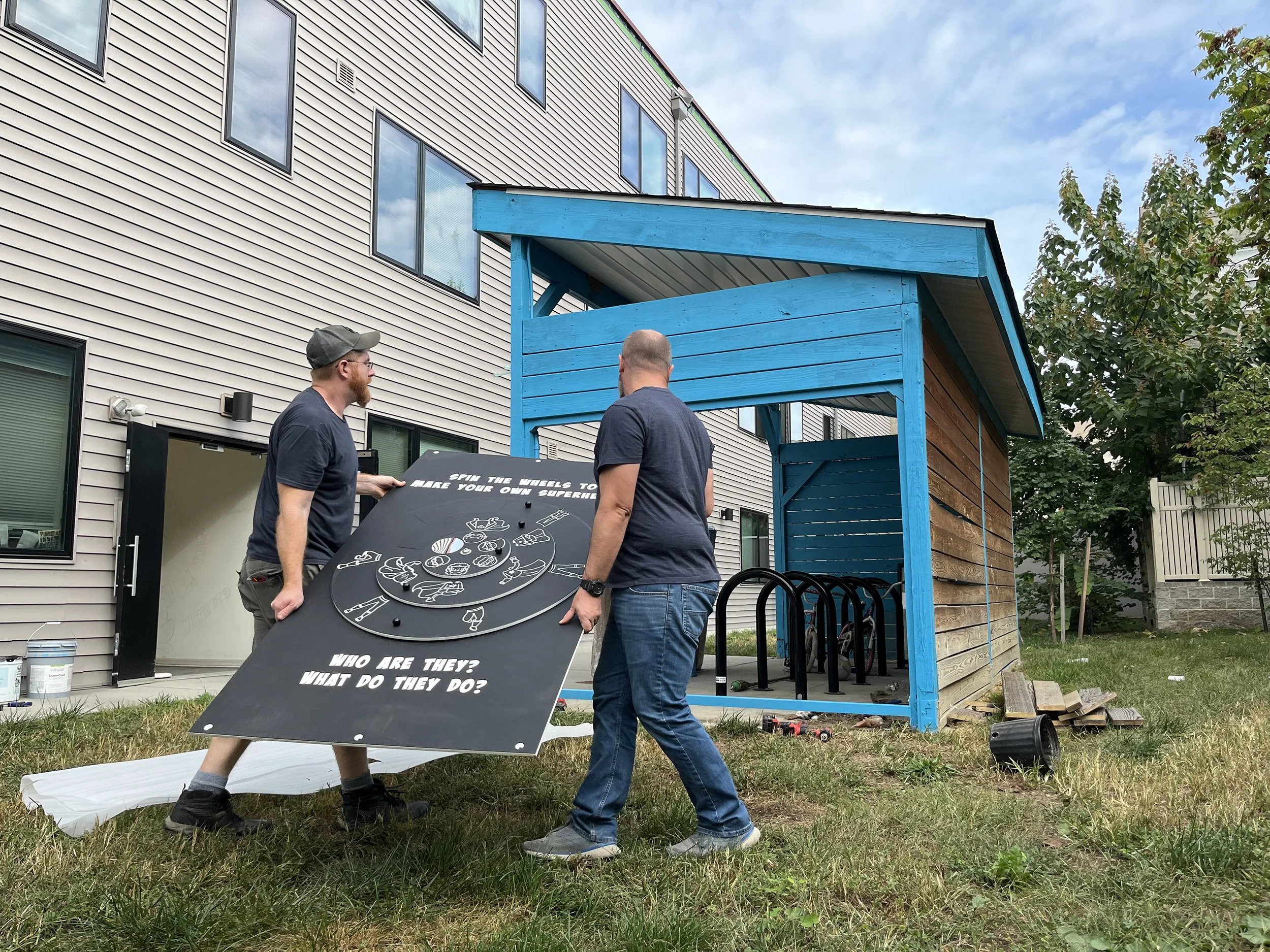
Rather than rebuild or heavily modify the shed, we worked with what was already there. Existing framing was retained and leveraged wherever possible. New components were calibrated to integrate with the original structure. The result preserved the architectural ambition while making the system buildable, durable, and cost-aligned.
Modular Construction.
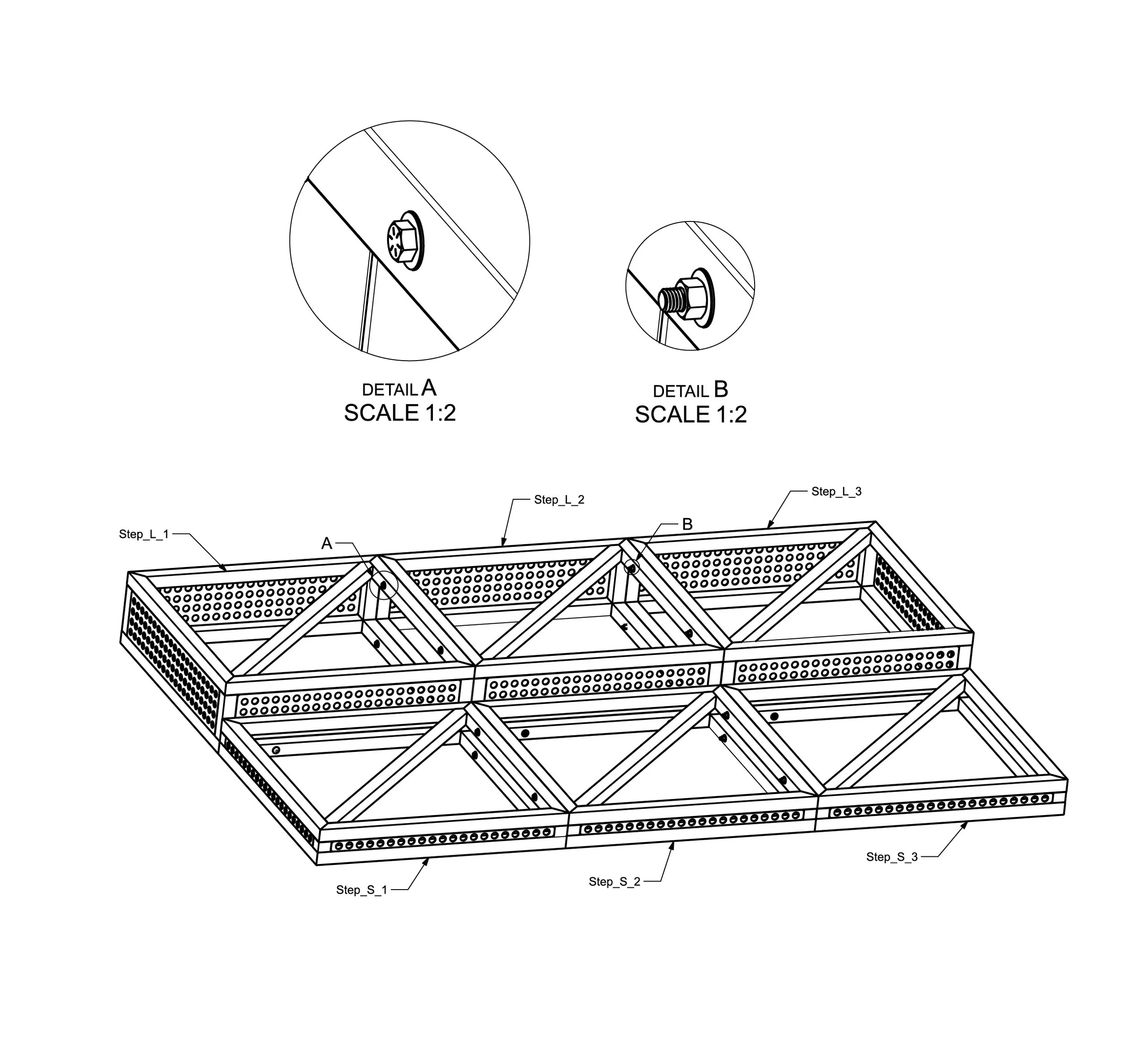
To avoid complex permitting requirements and invasive construction, the stage platform was designed as a modular system. Prefabricated components allowed for straightforward transport and rapid on-site assembly, reducing disruption within the housing community.
Interactive elements followed the same logic. The spinning letter panels were designed to be supported by the existing shed structure rather than requiring demolition and rebuild. Mechanical components were simplified to essential movements, improving reliability while reducing maintenance exposure. Every decision prioritized ease of installation and long-term serviceability.
Outdesigning Constraints.
The Learning Pavilion reflects a belief that strong ideas do not require heavy intervention. By reworking an existing structure rather than replacing it, simplifying architectural gestures into industrial systems, and focusing on modular, low-impact construction, we were able to expand the function of the shed without expanding its footprint.
The project demonstrates how disciplined translation can unlock new value in overlooked infrastructure. Through calibration of structure, material, mechanics, and budget, the shed now operates as stage, classroom, and gathering space. What was once static storage has become active community infrastructure, embedded directly within the space of everyday life.
Links & Press.